Doorway Moments Making Everyone Feel They Matter
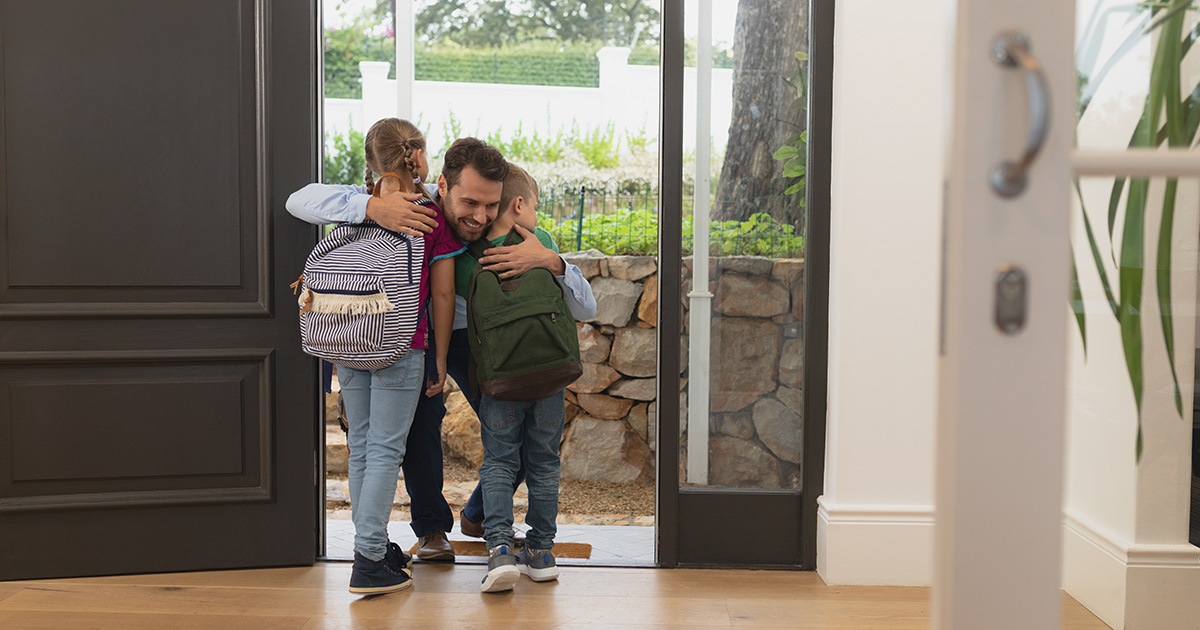
You know that half-breath before the front door opens—shoes scuff, keys jingle, voices drift down the hallway? In those few seconds a family quietly decides what kind of evening it will be. Not perfect. Not Pinterest. Just: Do we tell each other, "You matter", right now? Doorway moments that makes everyone feel they matter can be small changes that makes a massive difference to your child and connection within your family.
Those little thresholds—good mornings in the hallway, after-school hellos, lights-out goodnights—are small enough to fit inside the busiest Tuesday, and somehow big enough to change the mood of a whole home.
Why these moments matter
At every transition, kids (and the adults who love them) are scanning for two answers: Do you see me? Am I safe here? Do I matter here?
A warm hello whispers, “You matter to us”
A gentle goodbye promises, “You don’t have to earn your way back - you matter as you are.”
None of this needs choreography. It just asks for a fraction of attention, offered kindly.
A simple hello that takes ten seconds
If you like a tiny guide, try this: See, Say, (maybe) Touch, and Offer a Choice.
Pause for a heartbeat and really look at their face. Say their name and offer one kind line. If touch is welcome, add a quick squeeze or high-five. Then give a tiny next step—so re-entry feels easy.
It can sound like, “Hey, Maya. I’m so glad you’re home. High-five? Shoes first or snack first?” Or, “Goodnight, Eli. I noticed your kindness at dinner. Forehead kiss? Would you like a story or a quiet snuggle?” Ten seconds. Presence over performance.
Coming home from school
Many kids arrive home full of static—hungry, overstimulated, completely done. The kindest thing we can offer is decompression before conversation. Meet them with eyes and a simple “I’m glad you’re here,” point them toward a snack or a soft corner, and save the big questions for later. When words do come, keep them small at first: “What were the best ten seconds?” or “Was there one tiny ‘ugh’ today?” Let them choose the door into the story.
When I walk in the door
When I get home, my kids are all over me—talking, tugging, presenting treasures found under the couch. And most days a part of me wants the opposite: sit, breathe, go quiet. I’m learning that their noisy welcome is a gift. It’s their way of saying, “You matter to us.”
So I meet the first burst with a little celebration and then I name my need. For about a minute I crouch down, say their names out loud, and really look at whatever they’re proud of—the Lego tower, the new drawing, the half-told joke. Then I say, “I loved that hello. I’m going to grab water and change my shirt—five minutes—and then I’m all yours.” And I keep the promise: I come back on purpose, phone away, eyes present, and give them five focused minutes. It’s amazing how far that couple of minutes carry the rest of the evening.
If you’re trying this at your place, use language that sounds like you. For example, “Show me your best ten seconds; I’ll take five to reset, then it’s you and me.” With teens, “I love this hello. I’m grabbing water—back in five if you want me,” respects their space while keeping you close.
On the days you’re completely fried, still anchor the moment. Offer a quick hug and whisper, “I’m glad to be with you. I need two quiet minutes, then I’m back,” and set a small timer so they can see the promise ticking. When you honor their welcome and honor your limits—in that order—it sets an easy, welcoming tone for the evening.
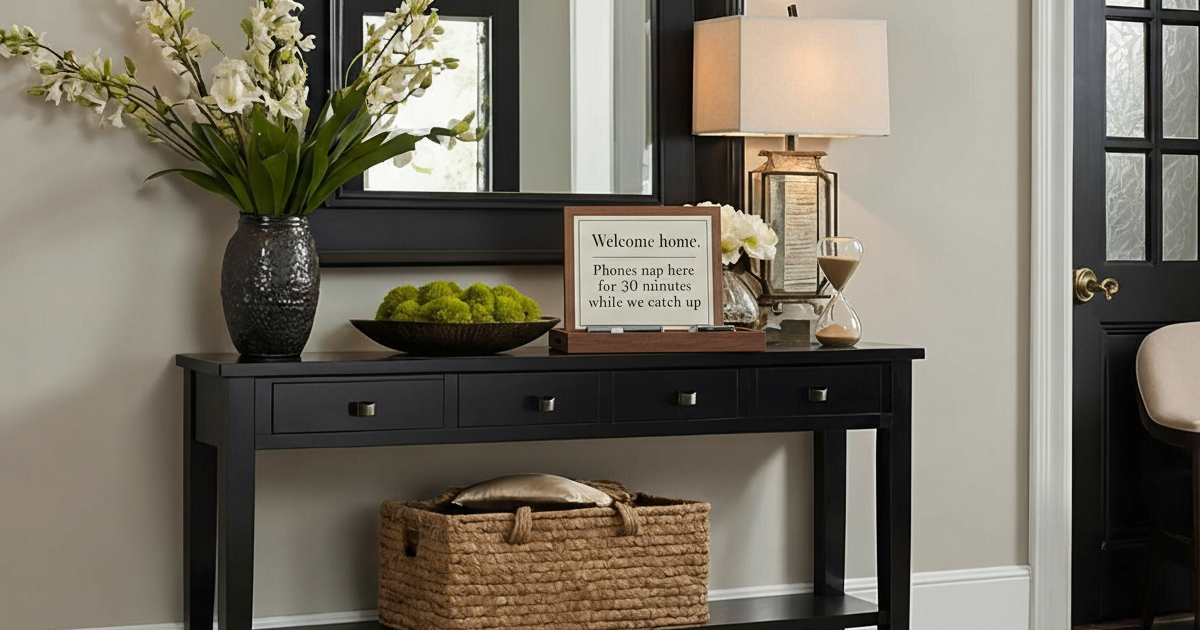
Our “Hello Window”
We’ve given our arrivals a bit of ceremony. When we come home, people go first. For the first thirty minutes, our phones take a nap on the table by the door.
We do it so the first minutes at home tell each person, louder than any screen ever could, "you matter more than this."
That half an hour is for faces, stories, and settling back into one another. If someone’s on call, the phone still rests there face-down with notifications off. There’s a tiny sand timer next to the bowl; we flip it and forget it. After the half hour, we grab our phones if we need them—most nights we don’t rush.
Sometimes we even say it out loud: “Let’s put our phones away and make a fuss about being together.
Goodbyes that travel with them
Partings are little launches. They don’t have to be profound to be powerful. On the school run: “I’ll be thinking of you at maths. You’ve got this. See you at the blue gate.” On sleepy mornings: “I love you for free. Back-pocket hug?”—and we tuck an imaginary hug into a pocket. For our toddler, we draw a tiny heart on her palm—a love button. We press it at goodbye, and she can press it later for a little “ping” from us when words are hard. When a tough day is coming: “If it gets spicy, text me a color and I’ll know.” You’re building a bridge they can walk back across.
When you’re not physically there
Connection can still cross the threshold. Leave a note on the fridge: “Proud of your try-again.” Slip a tiny joke into a lunchbox. Hide a doodle in a shoe. Record a short voice message before the rush so it’s waiting when they wake. Small, honest, and kind beats elaborate every time.
Different ages, different flavors
-
Toddlers: Get low with open arms and name what you see: “You ran so fast to me!” Sometimes we add a tiny heart on her palm—a love button—so she can press it for a quick “I love you” signal anytime.
-
Primary-age kids: Offer small roles that feel like belonging—door captain or snack picker.
-
Tweens: Shoulder-to-shoulder warmth works: “Glad you’re back. Hoodie looks cool. Snack first?”
-
Teens: Respect the bubble and stay reachable: “Hey you. I’m in the kitchen if you want me.” They usually wander in when they’re ready.
If anyone in your home is sensory-sensitive, swap touch for signals and create a calm path from door to soft corner. You can agree on a simple code—green light for chatty, blue light for quiet first. The message stays the same: You’re okay here.
When the doorway goes badly
It happens. Bags drop, voices bump, someone cries. Repair is the magic. Try, “That was rough. I’m sorry for my tone. I’m glad we’re together now. Want to start over with a hello, or do you want a few minutes first?” Don’t wait for perfect words; warm and truthful is enough.
Partners and caregivers count, too
Offer each other threshold kindness: a hand on the back, a glass of water pressed into a palm, a quiet “Thanks for carrying the morning.” Kids learn love by watching it.
When siblings come home to each other
Arrivals aren’t just parent-and-child moments; they shape how brothers and sisters see one another, too. We try to make space for a tiny sibling welcome—nothing big, just a line that says, “I’m glad you’re back.” It can be as simple as, “Hey, you’re home,” “I saved you a seat,” or “Want to hang here with me?” These tiny welcomes help brothers and sisters practice saying to each other, “you matter to me,” in everyday ways.
Older kids often soften when they’re given a small role—door opener, snack giver, show-and-tell audience—and younger ones light up when their big brother or sister feels like a fan.
And when a hello goes wobbly, we teach a simple repair: “That came out a bit bumpy. I’m glad you’re here.” Then we move on. The point isn’t perfect manners; it’s the habit of noticing each other’s return. Little by little, that becomes part of how our house works: when one of us comes home, all of us belong to the moment.
Tiny things to try today
Make eye contact before you ask anything. Say their name before the instruction. Sit on the same side of the table for a minute when they get home. Keep a little “door basket” with snacks, hair ties, and a silly sticker so welcome is visible. And maybe end the day with, “What should I remember about you from today?”
The quiet truth underneath it all
Your hello tells them who they are at home: wanted, welcomed, worth pausing for. Your goodbye tells them who they are out there: carrying love as they go. Ten seconds, a few times a day—it isn’t a program, it’s a soft place to land. Repeated, that softness becomes the story your family believes about itself: We belong to each other—and we make a little fuss about that.
Try these doorway moments that makes everyone feel they matter and see what the impact can be on your family. You might be a little more prepared for the chaos and find that your frustration levels decrease as your kids feel connected.